If you want the short answer: pick Traditional Cantonese for a classic gift, Momoyama if you like it less sweet and a little modern, Mini Momoyama for sharing or trying something new, and baked Teochew if you love flaky pastry over dense paste. La Levain makes all four in Singapore, so it comes down to crust, sweetness and who you’re buying for.
Here’s how the four ranges compare.
| Range | Crust | Filling style | Sweetness | Best for |
|---|---|---|---|---|
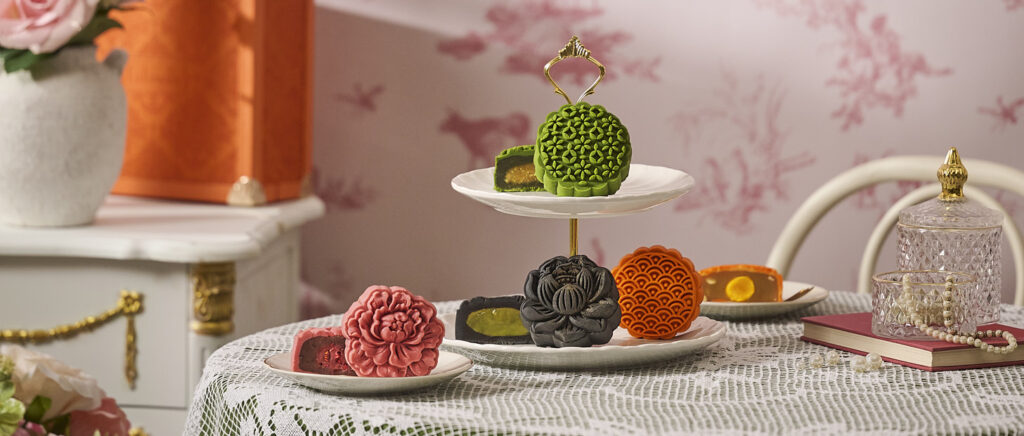
| Traditional Cantonese | Dense, thin baked skin | Classic lotus paste, yolk | Rich, traditional | A safe, classic gift |
| Momoyama Cantonese | Soft, naturally coloured skin | Modern lotus blends | Lower sugar | Modern taste, less-sweet crowd |
| Mini Momoyama | Soft mini skin | Bold, experimental | Lower sugar | Sharing, first-timers, gifting |
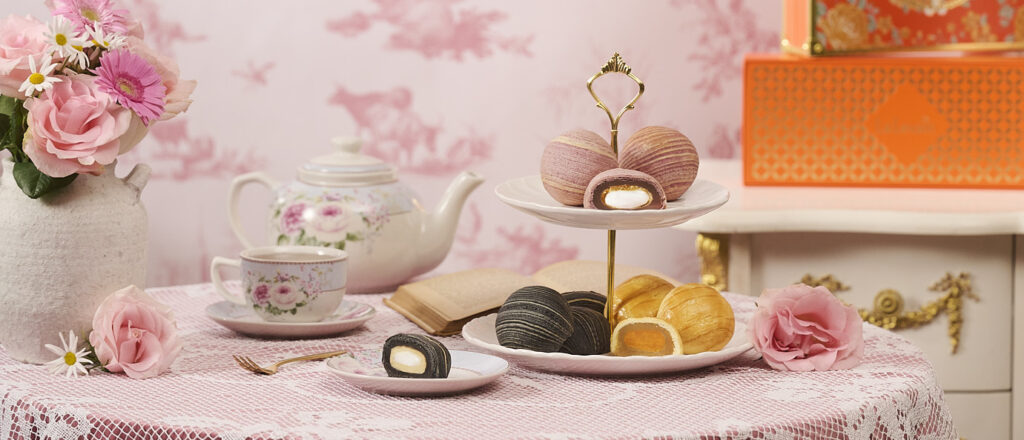
| Baked Teochew | Flaky spiral pastry | Yam, salted egg, sesame | Light | Traditionalists & pastry lovers |
What’s the difference between a Cantonese and a Teochew mooncake?
The crust. A Cantonese mooncake has a dense, thin baked skin wrapped tightly around rich lotus paste — the classic, heavier Mid-Autumn mooncake. A Teochew mooncake has a flaky, spiralled pastry that shatters when you bite it, with a lighter feel overall. La Levain bakes its Teochew mooncakes rather than frying them, so the layers stay crisp instead of oily.
Don’t read “lighter” as “less traditional,” though. Teochew mooncakes are one of the oldest styles and one of the hardest to make — so few bakeries in Singapore still make them that plenty of people choose the baked Teochew because it’s the classic, old-school mooncake, not a modern spin.
And what is a Momoyama mooncake?
Momoyama is a Cantonese-style mooncake with a softer skin that takes its colour from natural ingredients instead of baking brown. It’s lower in sugar than a traditional Cantonese mooncake, which makes it a good pick for anyone who finds classic mooncakes too sweet. La Levain’s Momoyama range is where the modern flavours live — Uji matcha with Valrhona yuzu chocolate, chocolate with pistachio crunch, mixed berry with raspberry rose.
Which mooncake is best for gifting?
For a formal or traditional gift, the Traditional Cantonese box is the expected, well-received choice. If you don’t know the recipient’s taste, the Assorted Traditional & Momoyama box covers both classic and modern in one set. For a younger crowd or a casual gift, the Mini Momoyama range reads as more playful.
Which mooncake is best if you don’t like it too sweet?
The Momoyama and Mini Momoyama ranges. Both are lower in sugar than traditional lotus-paste mooncakes, and lotus plumule in the paste adds an earthy note that balances the sweetness.
Which mooncake for first-timers?
Mini Momoyama. Smaller pieces mean a lower commitment, and flavours like Mango Pomelo with Grapefruit or Illy Coffee Lava are easier entry points than a full-size traditional mooncake.
Once you’ve narrowed it down, the full 2026 flavour guide walks through every flavour in each range, or browse the Mid-Autumn collection to order.
Frequently Asked Questions
Does La Levain sell snowskin mooncakes?
Not in 2026. The collection is Traditional Cantonese, Momoyama, Mini Momoyama and baked Teochew.
What’s the least sweet mooncake at La Levain?
The Momoyama and Mini Momoyama ranges — both are lower in sugar than traditional lotus-paste mooncakes.
Which mooncake is the most traditional?
The Traditional Cantonese range: dense lotus paste, thin baked skin, salted egg yolk, made the old way.
Can I mix flavours in one box?
Yes. The assorted box combines Traditional and Momoyama; the Teochew and Mini Momoyama boxes each include a mix of that range’s flavours.
Where can I buy La Levain mooncakes?
Online from the 2026 Mid-Autumn collection for delivery, or in person at 23 Hamilton Road, Singapore 209193 (Tue–Sun, 8am–6pm).
Are the mooncakes made in Singapore?
Yes. Every La Levain mooncake is made by hand in our own kitchen at 23 Hamilton Road — not mass-produced in a factory.